
STOMP
2025
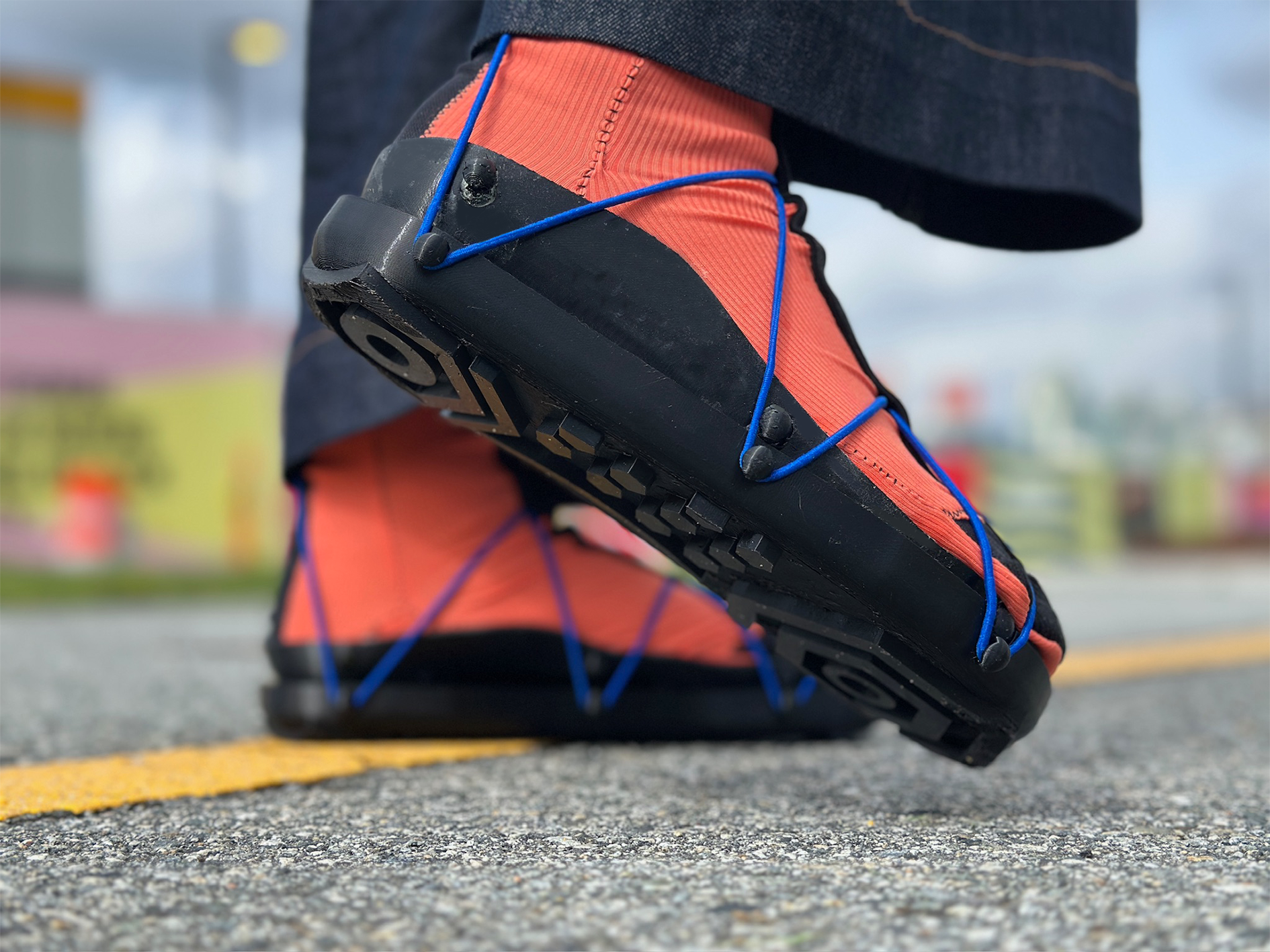
A reimagining of the barefoot shoe trend.
Experimental and modular, STOMP prototypes how to move you seamlessly from urban offices to mossy trails.
Context: School Project
Duration: 3 Months
Co-Designers: Alex Turnbull, Jaithra Mallipeddi
The Story
We set out to design a barefoot shoe after observing its rise as an activewear trend in Vancouver. However, as we researched this trend, we discovered a gap: while marketed as ergonomic and more “natural” for your body, barefoot shoes only perform well on natural terrain. On concrete, they can actually be quite harmful! We wondered how we might design for the modern Vancouverite, someone who commutes across sidewalks most of the day, but may take a hike after work
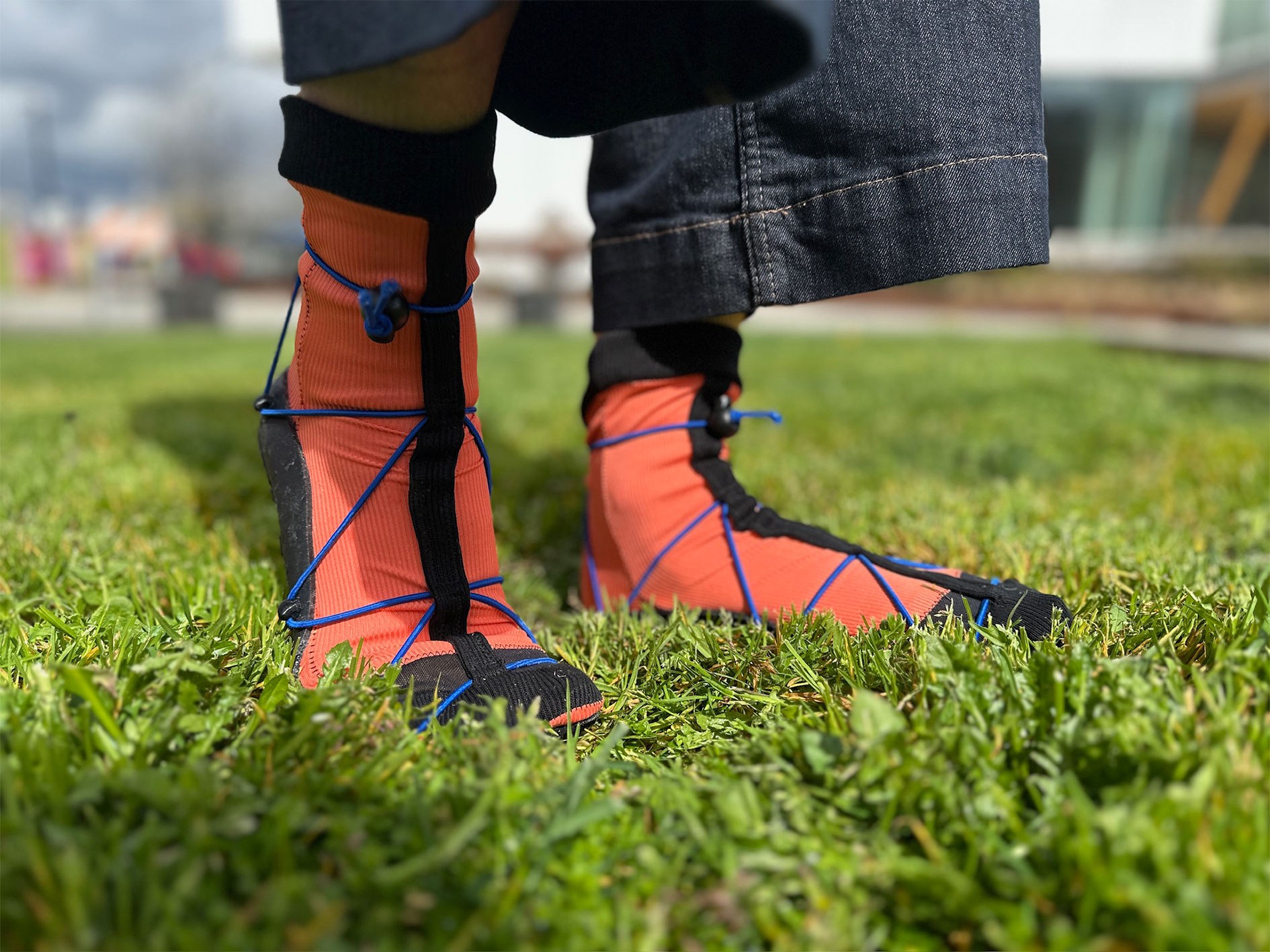
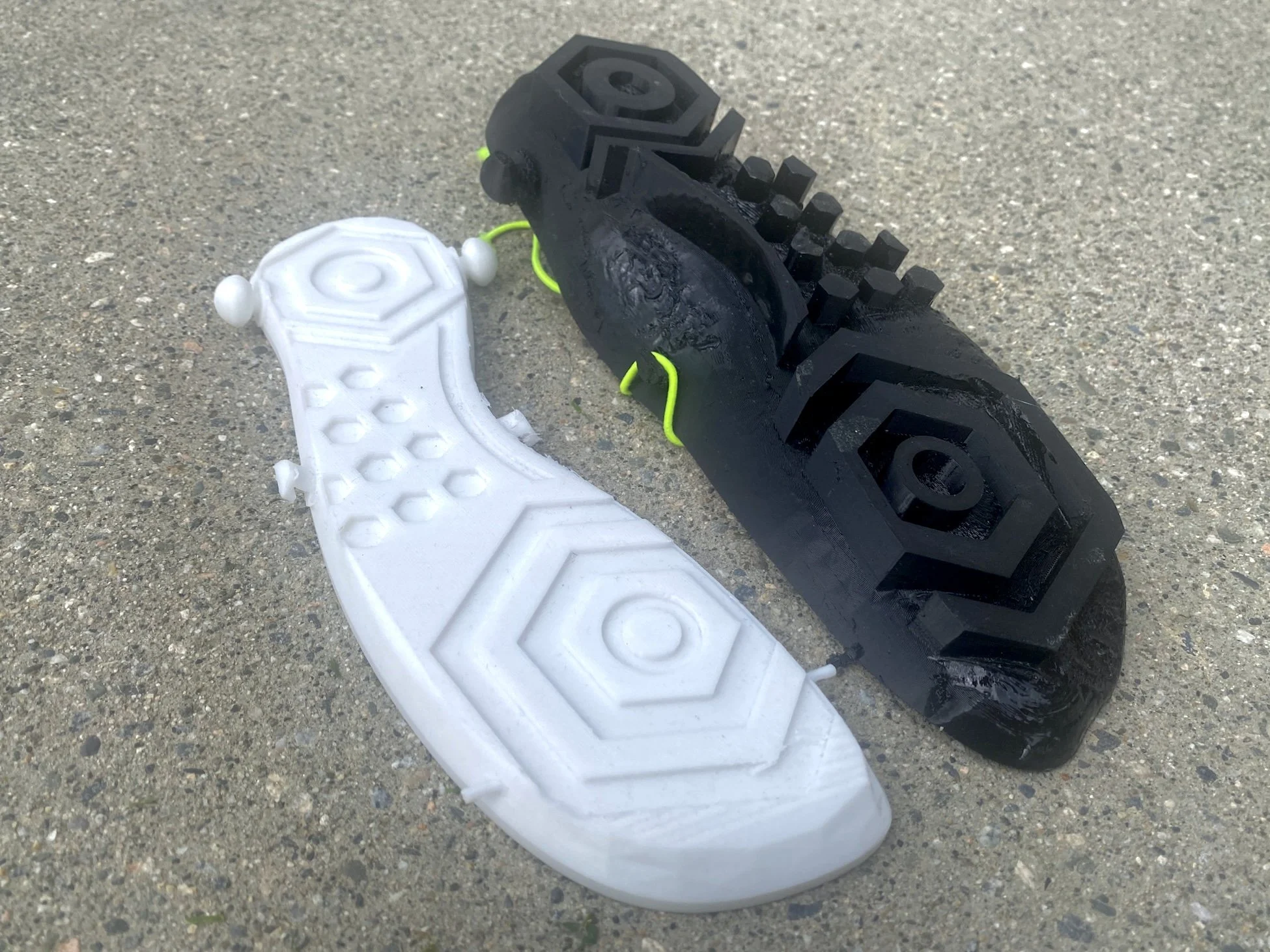
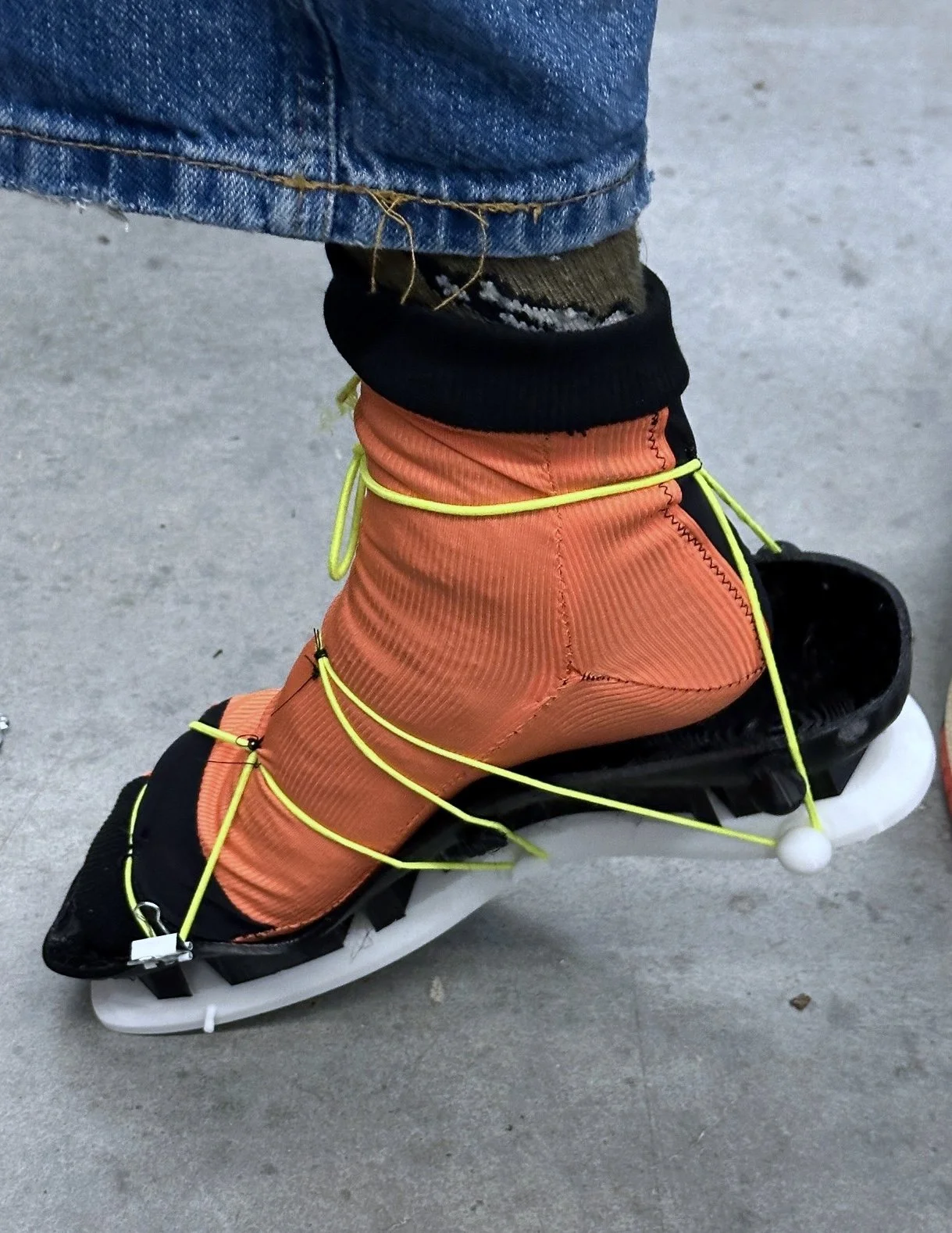
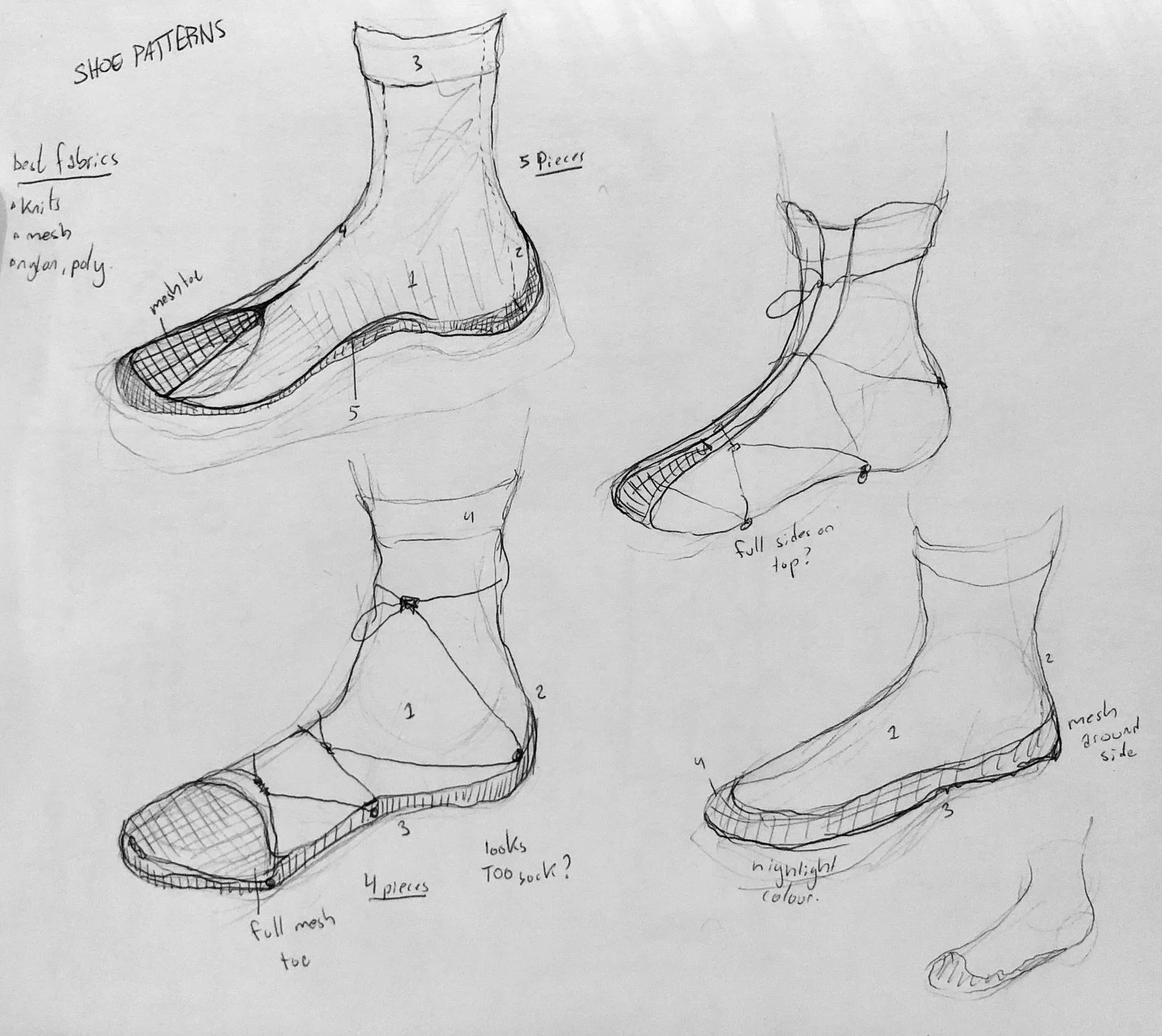
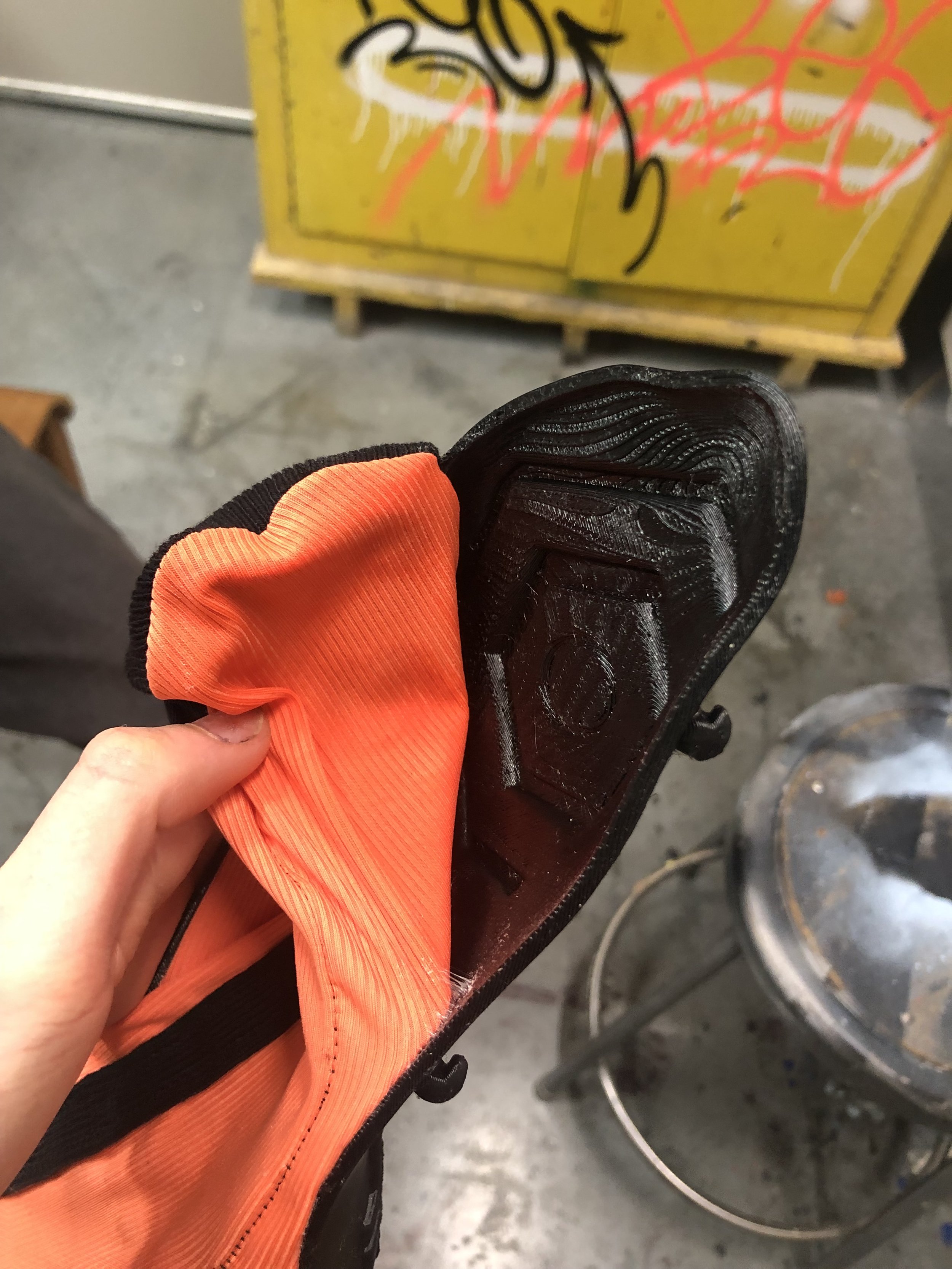
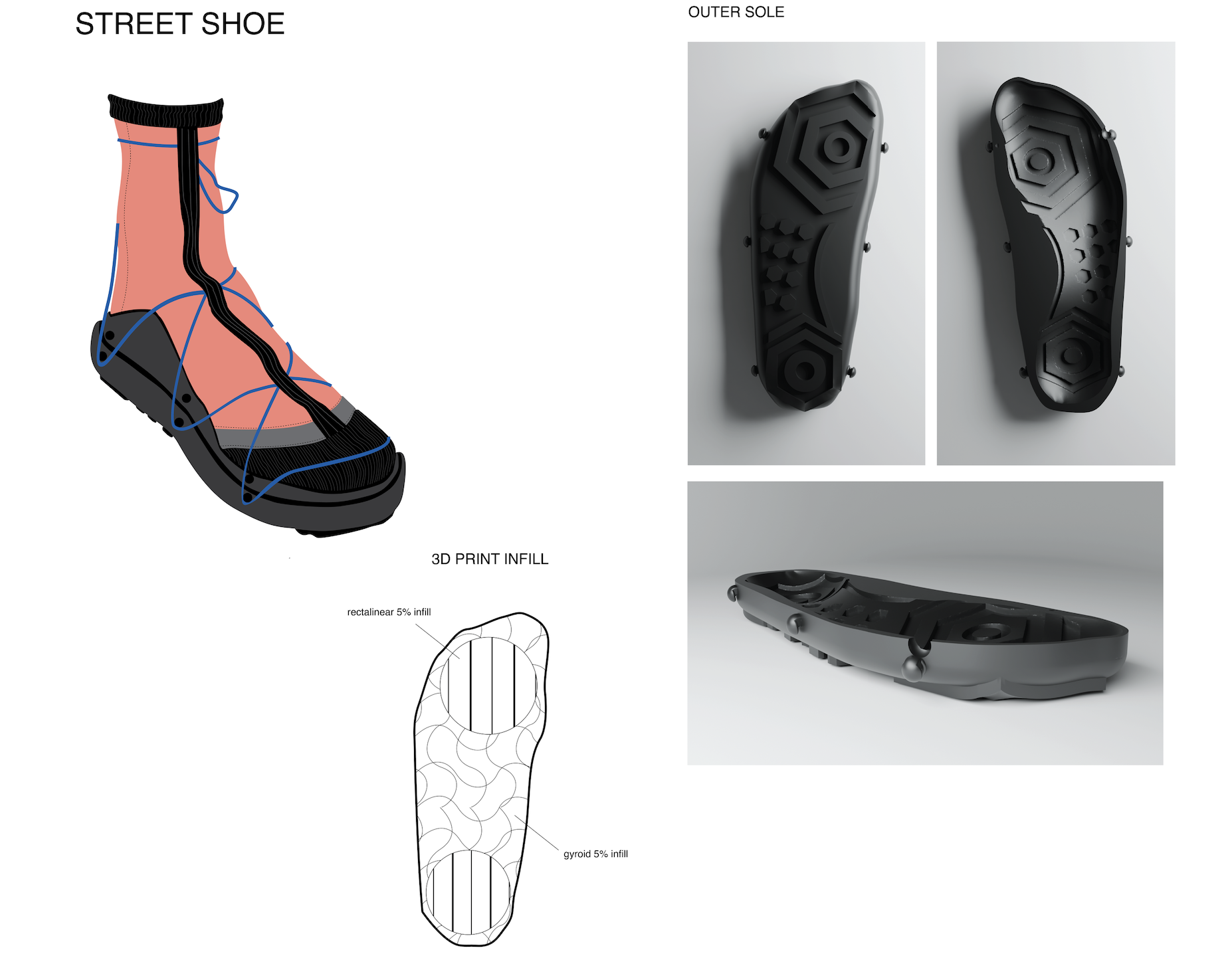
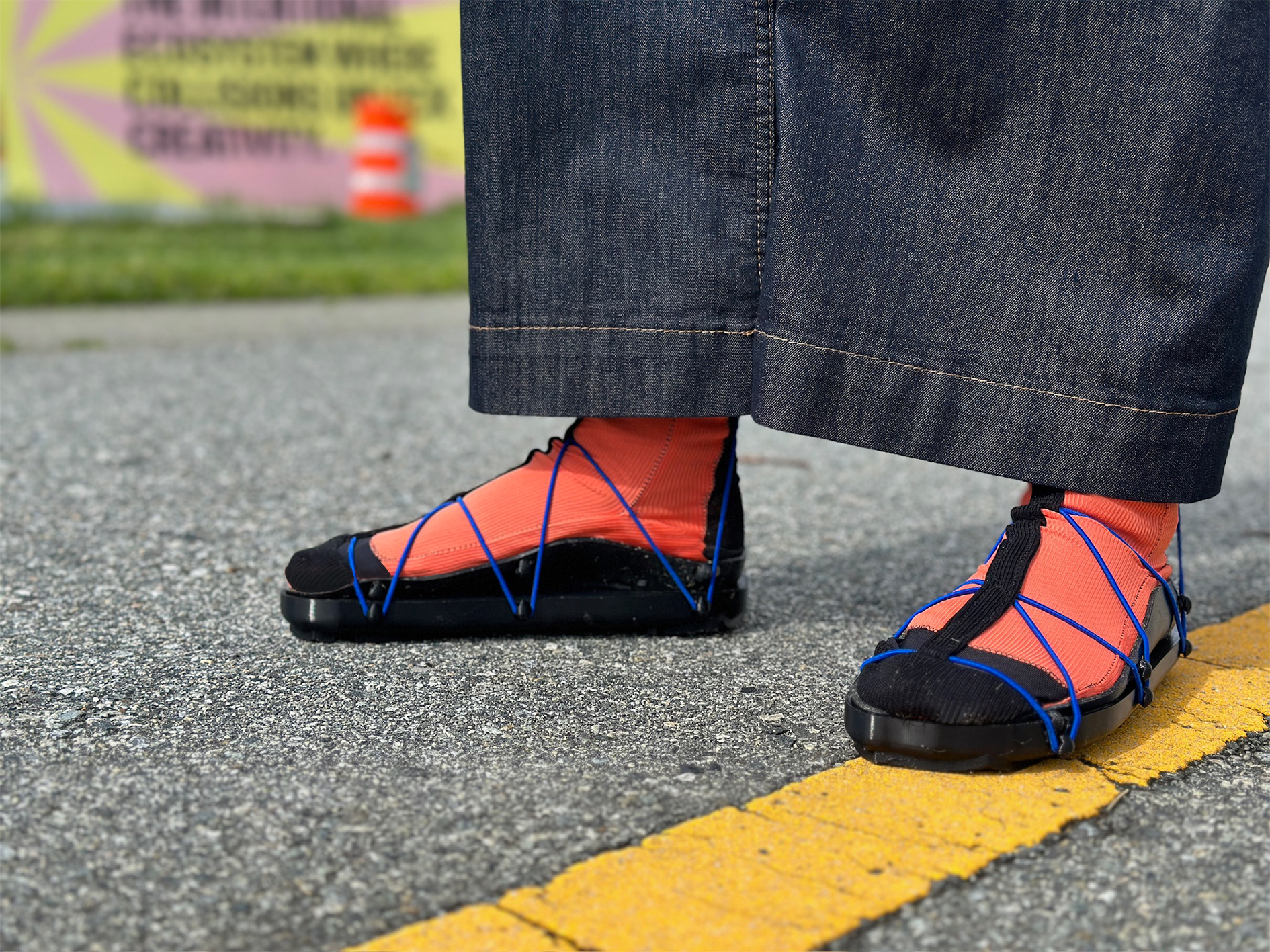
The outcome is a futuristic, athleisure silhouette with a two-part 3D printed sole: a true barefoot inner layer with a removable, city-friendly outer sole. Beyond just function, a two-part sole allows for modular recyclability, should each component be made from a different composite. Using 3D printing allowed for rapid prototyping and built in a level of customizability for future customers that is not possible with foam-based shoe-sole manufacturing.
Research
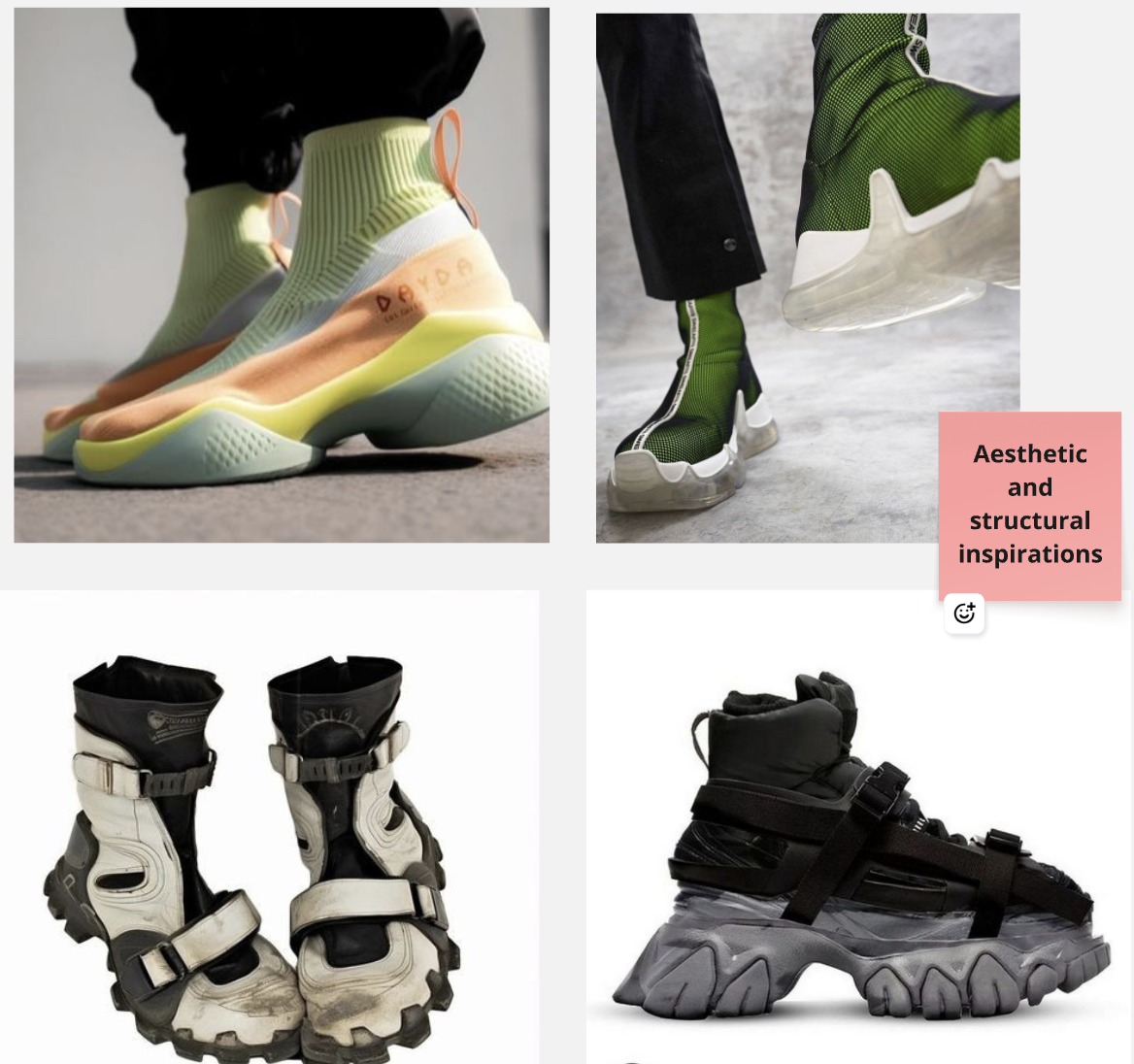
We did extensive research on the ergonomics of walking and compiled a lookbook
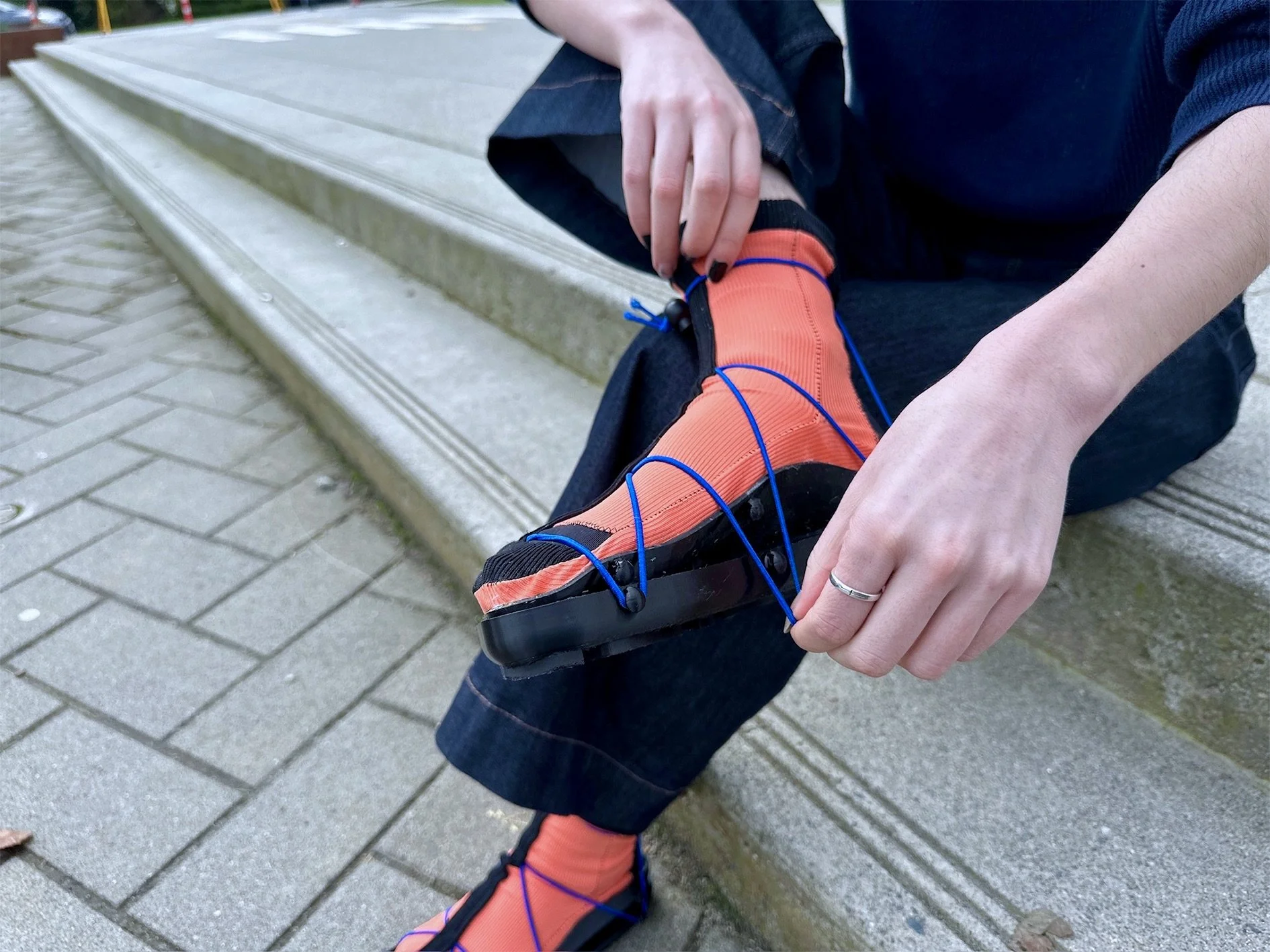
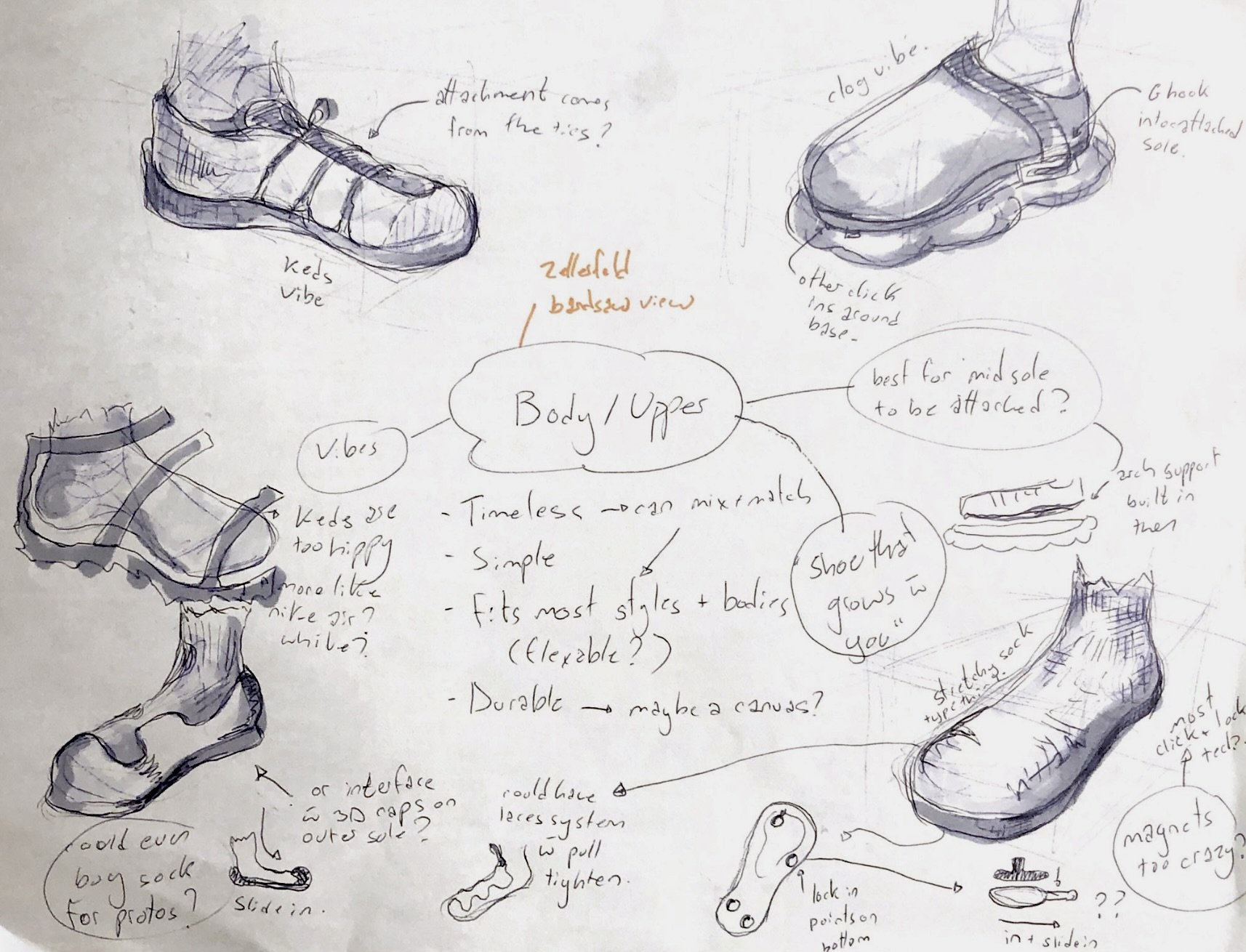
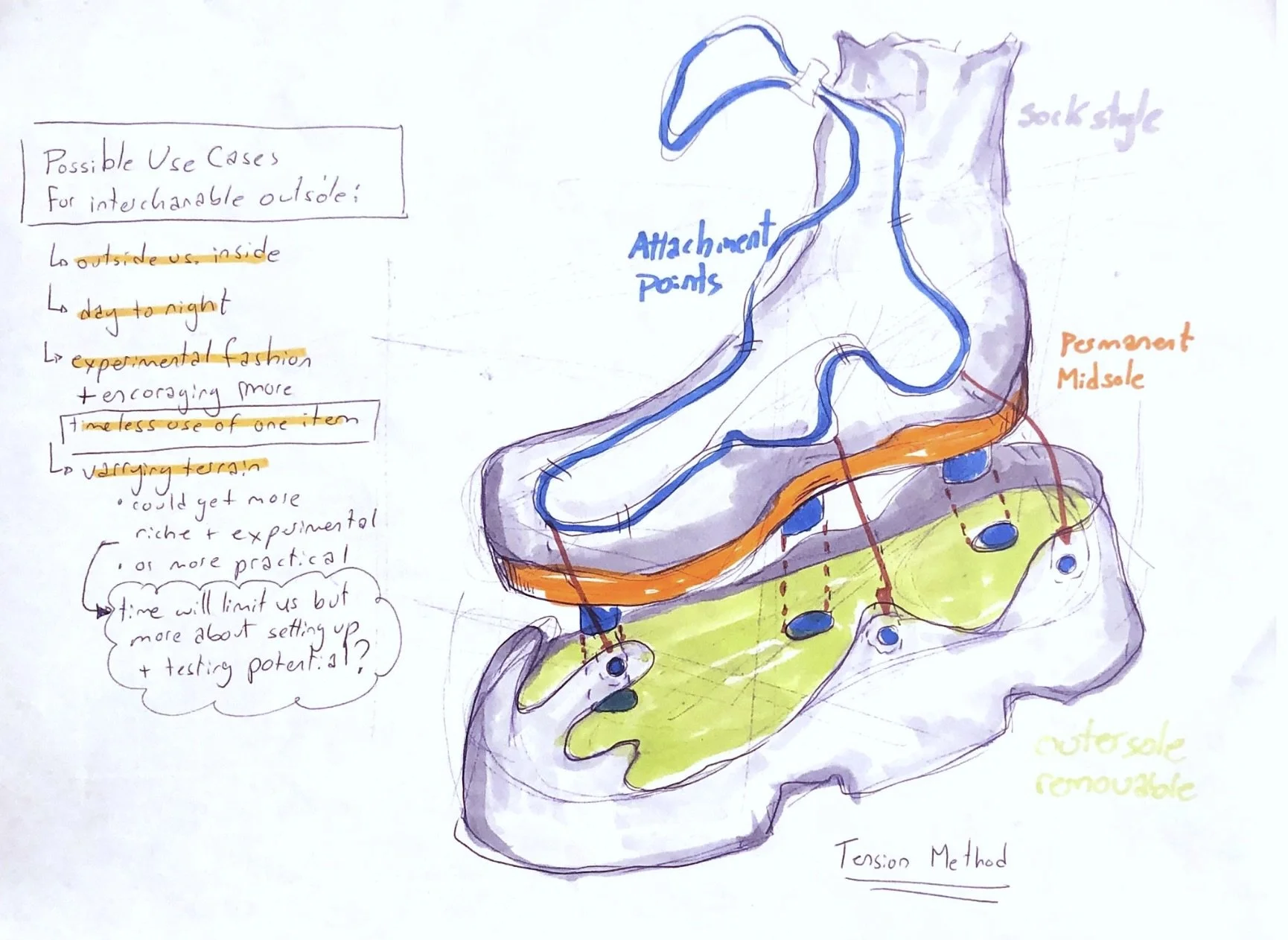
I brainstormed sole attachment methods using tension, friction, clasps, laces, and straps.
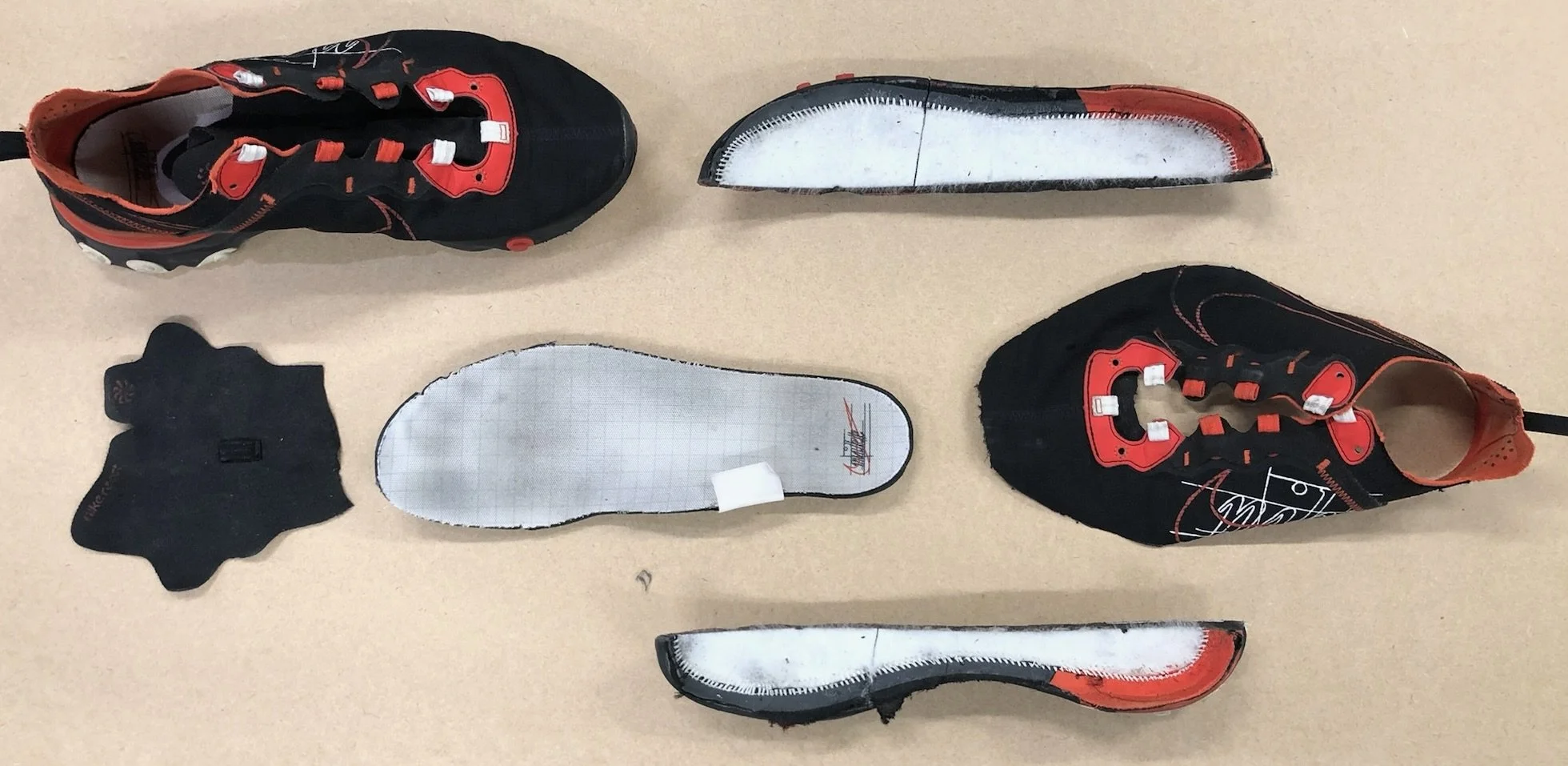
To understand why foam soles offer such good support, we deconstructed a walking shoe.

Iteration
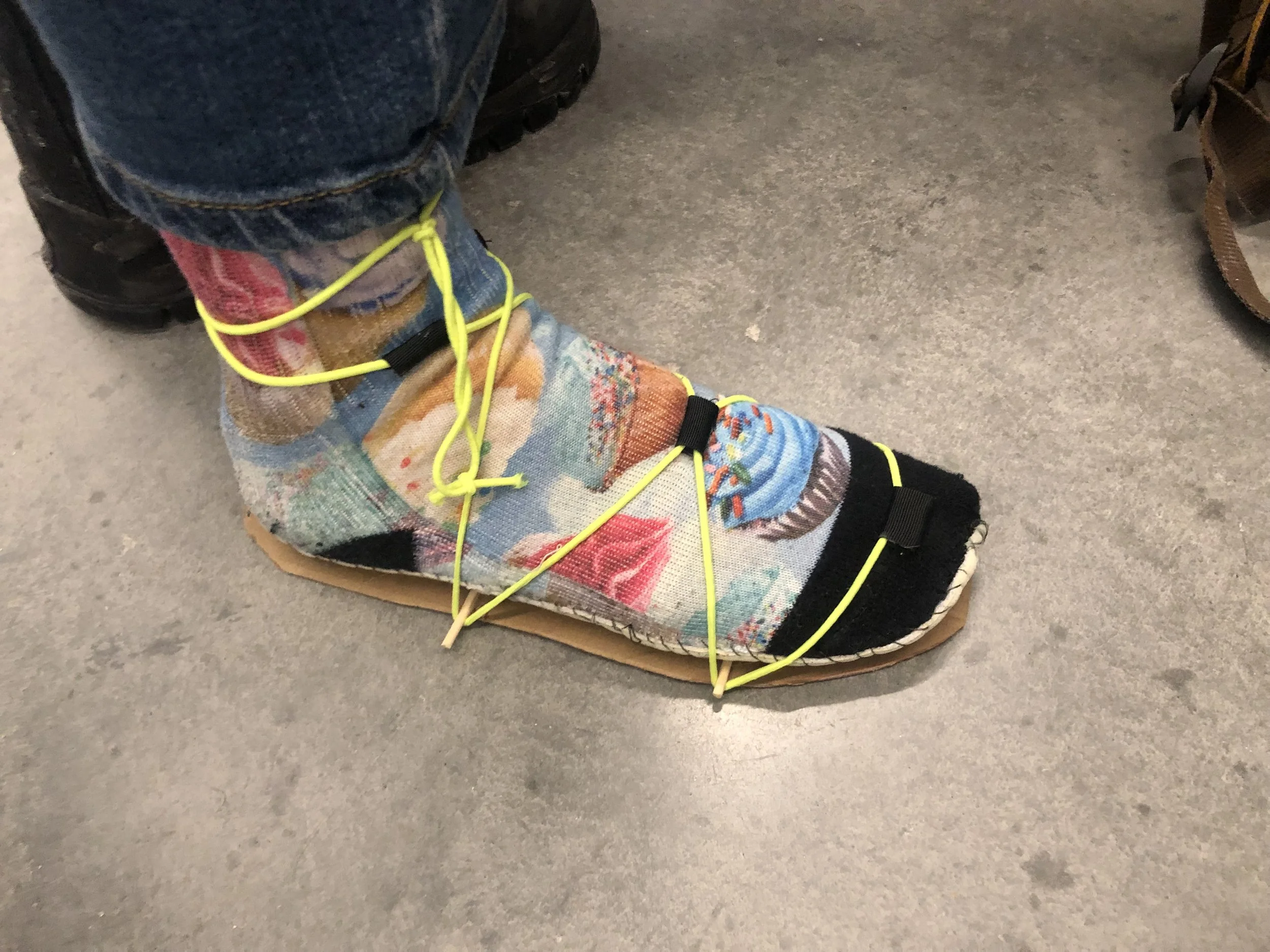
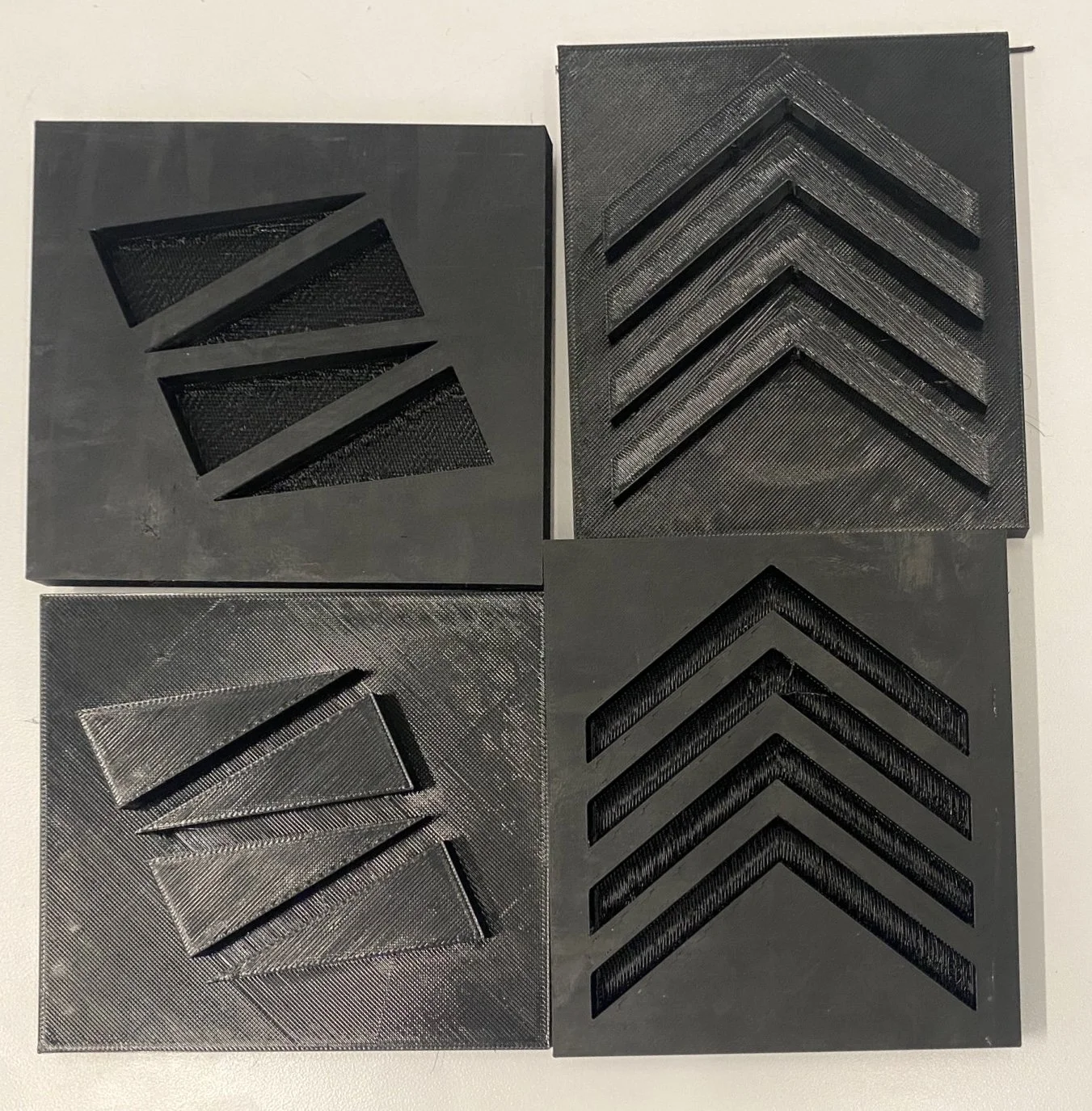
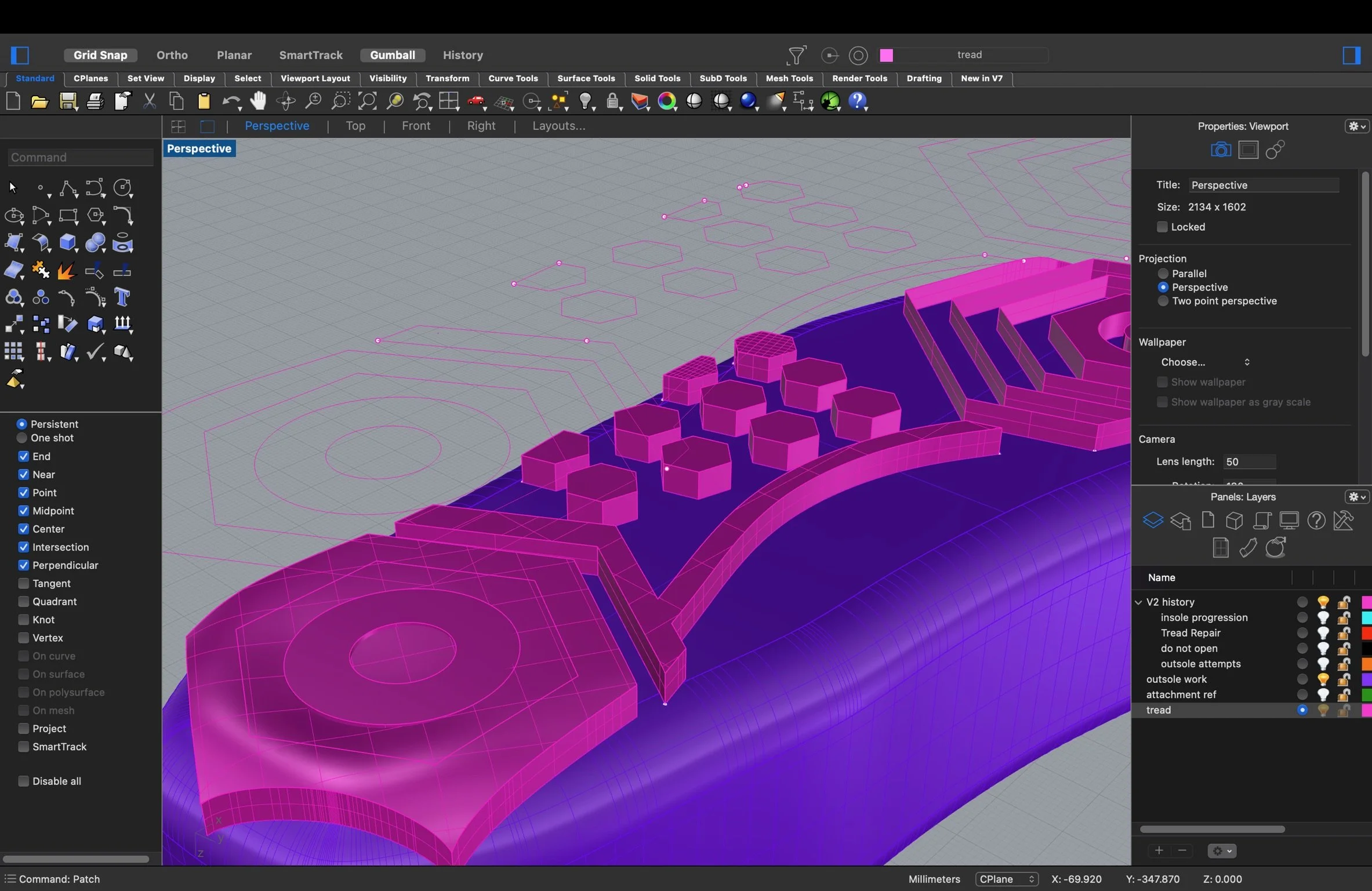
We chose a combination of a tread friction lock with a lace tension attachment, as it allowed both simple user setup and a strong connection between the 2 soles.
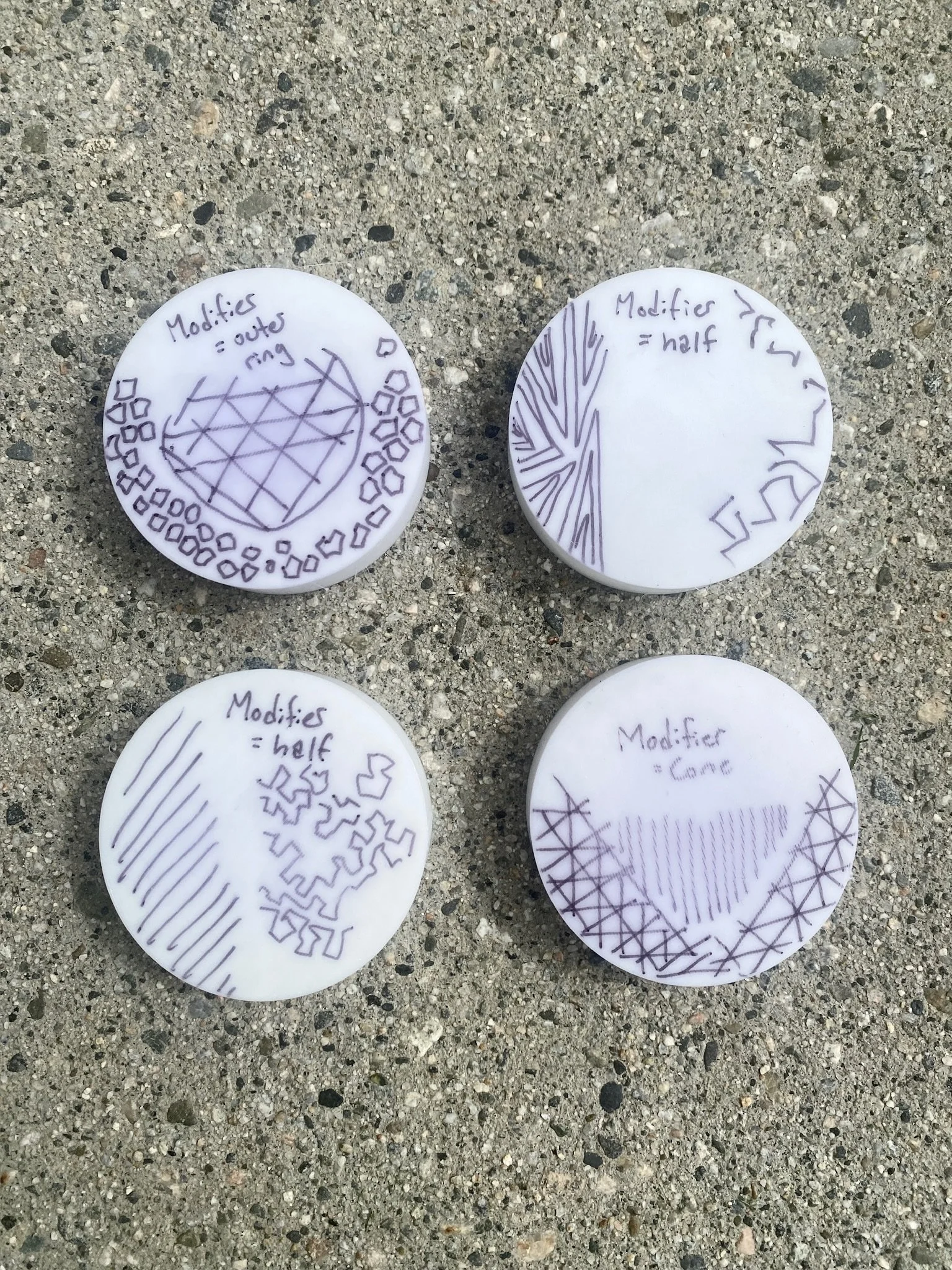
Based on the foam shoe, we tested 3D printing infills to create more cushioned points in the sole at the toe and heel.
All prints were done with TPU plastic due to its durability and flexibility.

Prototype
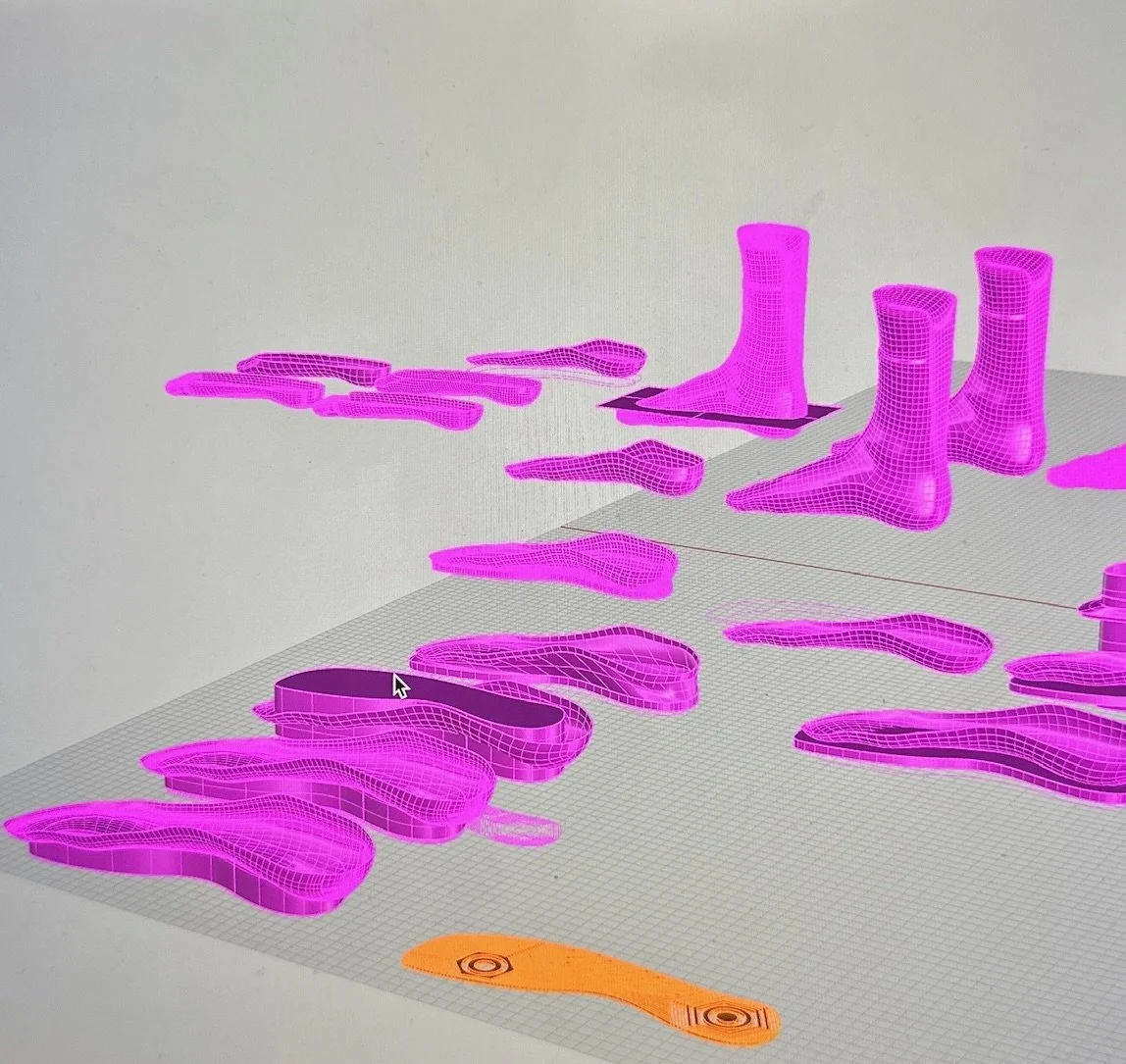
Working from a 3D scan of a foot, the geometric complexity caused complications with Rhino modelling. We adapted by simplifying the silhouette.
We had challenges post-processing the print, as TPU can not be precisely sanded. We increased the tolerance in the friction lock to accommodate.
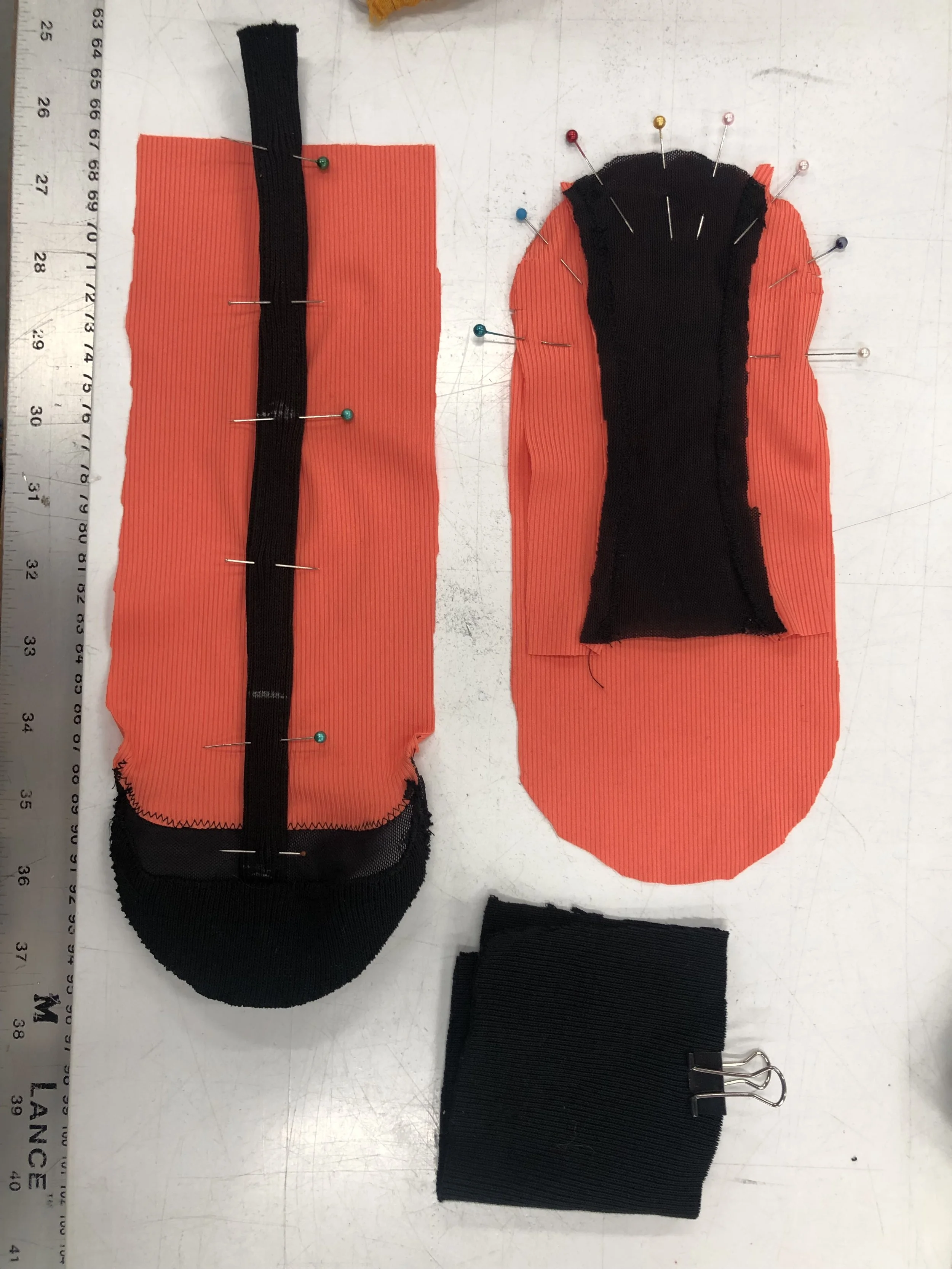
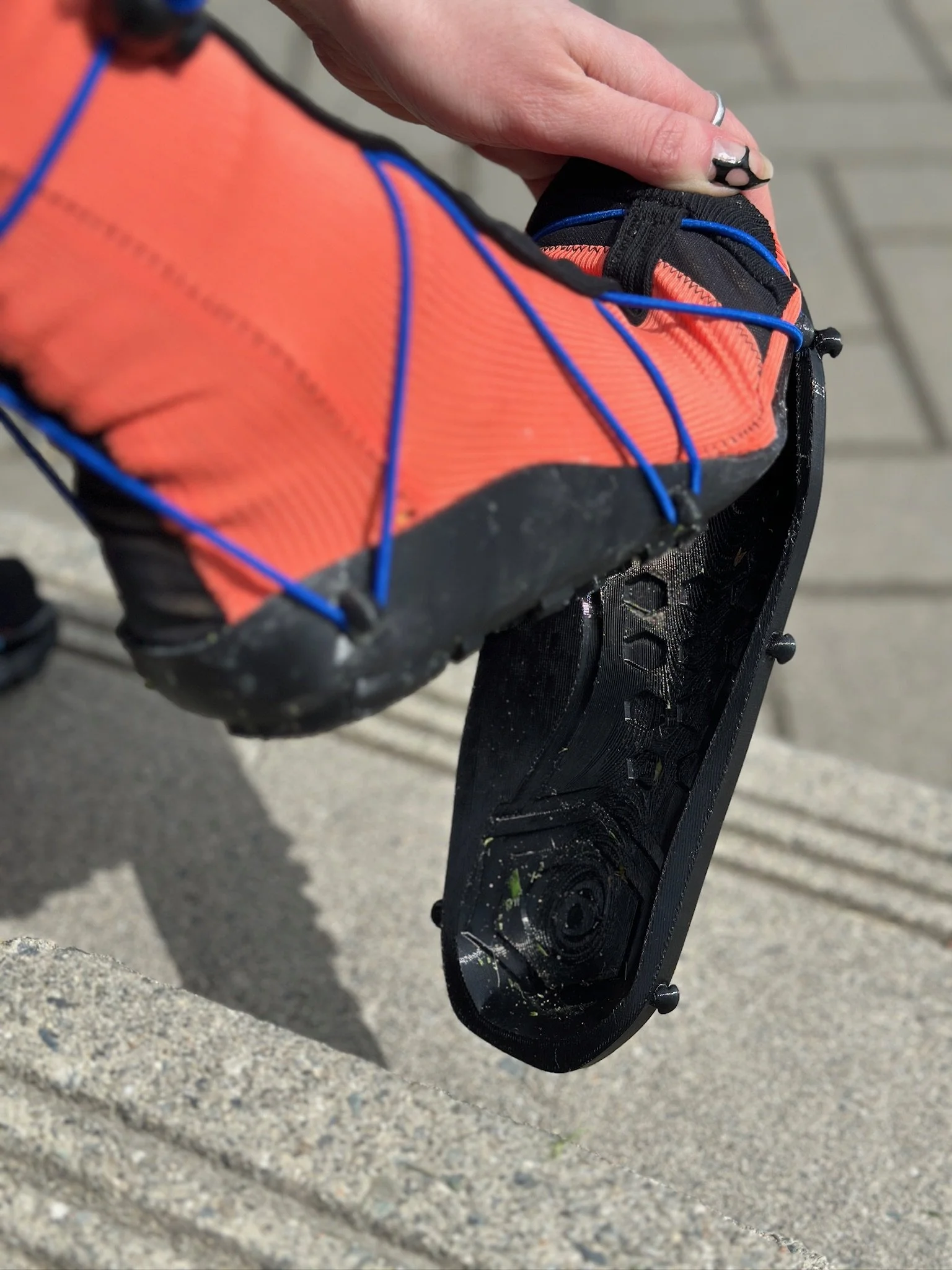
Resolution + Make

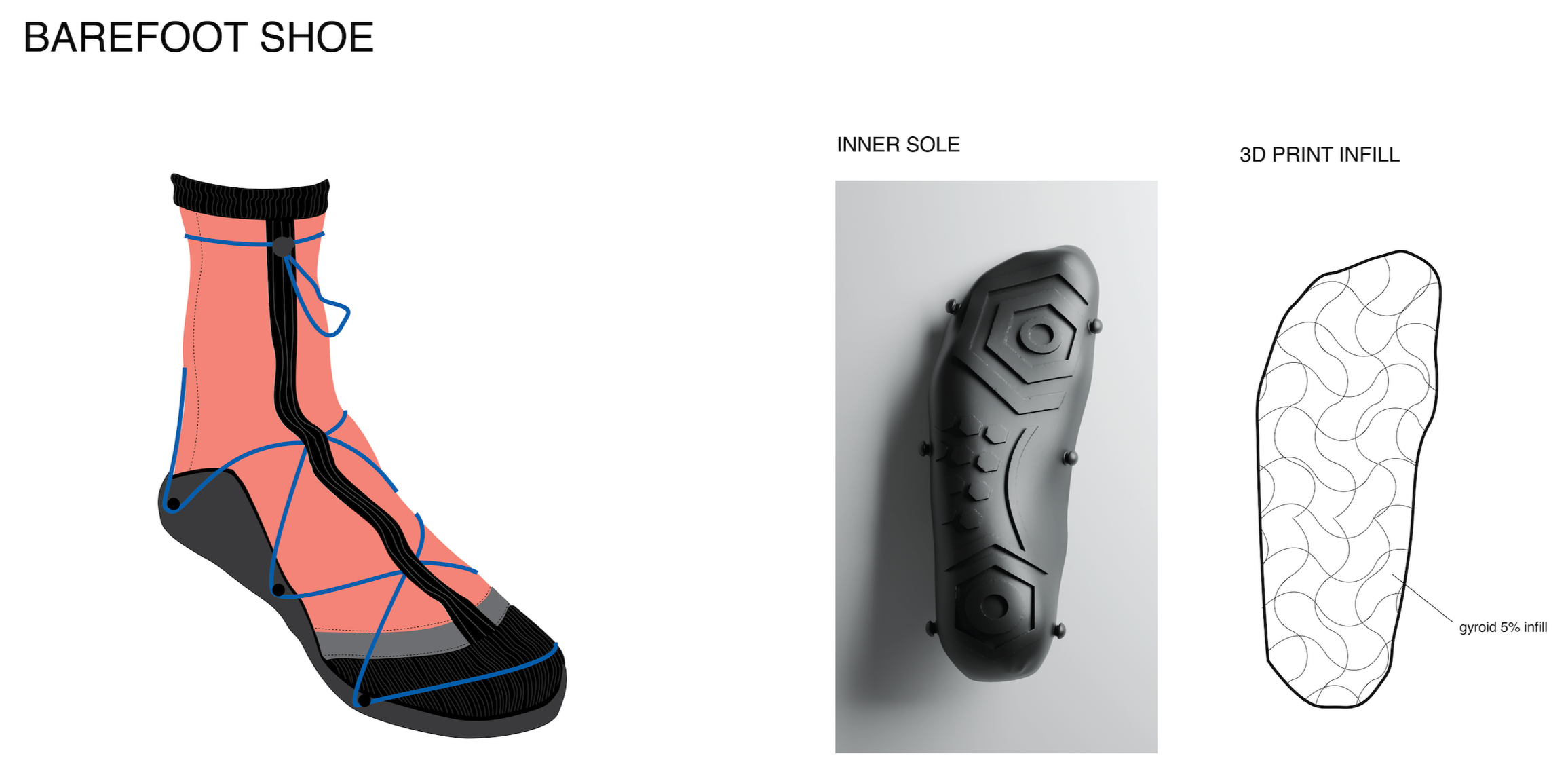
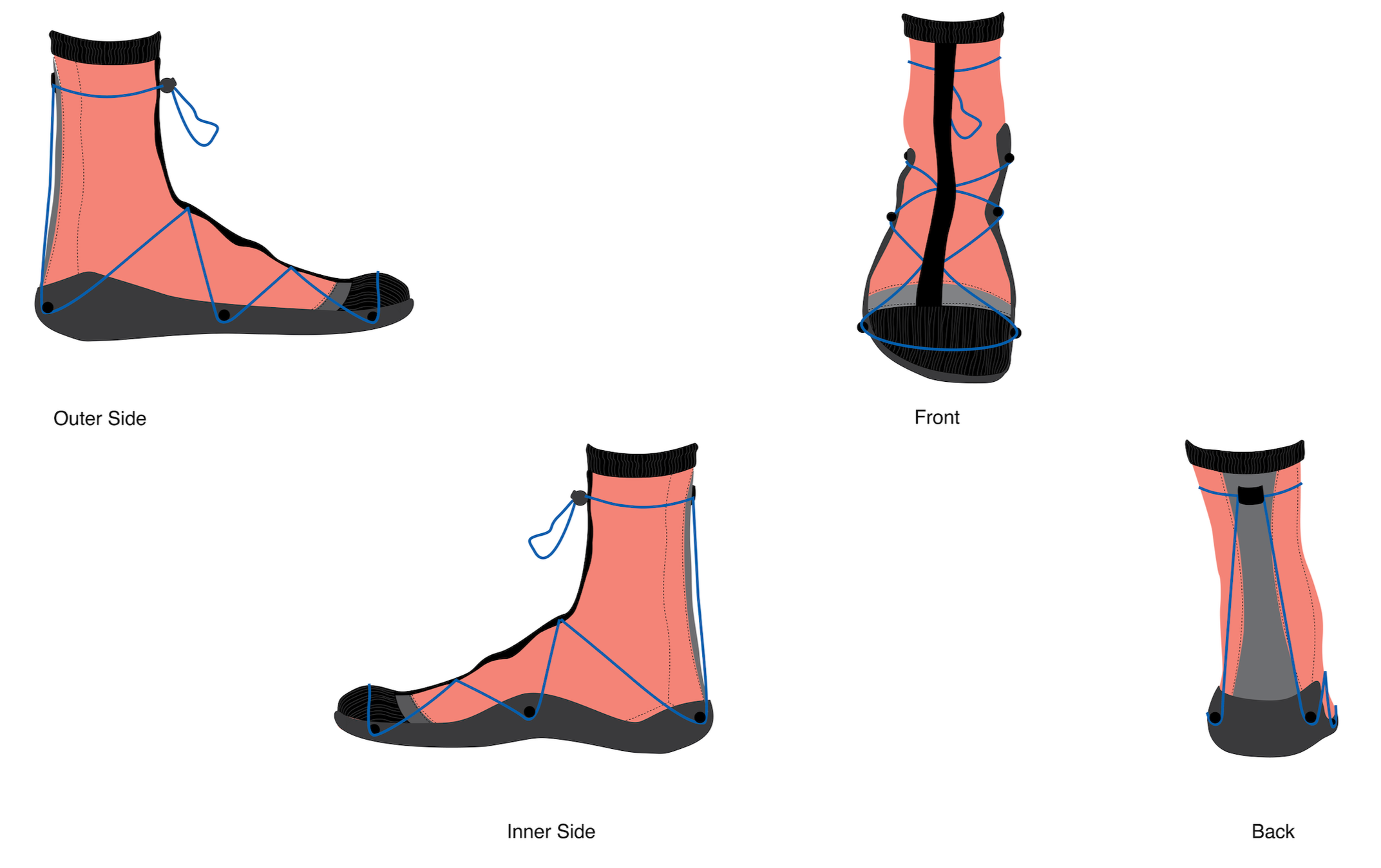
Future Considerations
This collaboration taught me how to adapt the design to the realities of manufacturing, and expanded my technical vocabulary, and rapid-prototyping skills. The outcome was the best of both worlds: ergonomic and boldly rooted in the way real people move through Vancouver. Next steps include further iteration on the fabric body, to make the shoe more durable when hiking.